NEWS
03
Sep

How to Choose the Right Grinding Wheel & Cutting Wheel?

Share:

Why Proper Grinding Wheel Selection Matters


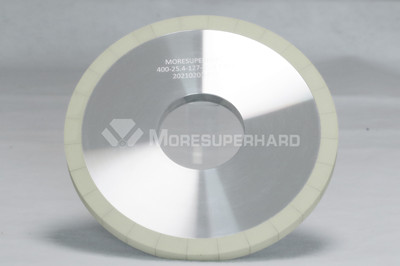
                              Grinding Wheel

Selecting the right grinding wheel or cutting wheel is one of the most impactful decisions in precision manufacturing. A mismatched abrasive tool leads to low material removal rates, poor surface finish, workpiece burn, dimensional errors, and even scrapped parts—all of which drive up production costs. In our experience working with aerospace, automotive, medical, and general industrial manufacturers, over 60% of grinding performance issues trace back to incorrect wheel selection rather than machine capability. The good news is that most selection errors are avoidable. This guide walks you through the essential parameters to specify when purchasing grinding wheels and cutting wheels, helping you get the right tool the first time and achieve consistent, cost-effective results.

5 Key Parameters for Grinding Wheel Selection


When requesting a quote or technical consultation for a grinding wheel, always provide these five parameters. Suppliers who ask for these details are ones you can trust—they are working to solve your problem, not just sell a product.

1. Workpiece Material & Hardness


The workpiece material is the single most important factor in abrasive selection. Different materials require different abrasive types and grit sizes. For example, pure titanium and titanium alloys are gummy and tend to load wheels—electroplated CBN wheels around 100 grit are often ideal. Hard and brittle materials like tungsten carbide (WC) and engineering ceramics require diamond abrasives. Steels, including alloy and tool steels, generally perform best with CBN (cubic boron nitride) systems. Always specify the exact material grade and hardness (HRC or HV) when requesting a recommendation.

2. Workpiece Dimensions & Geometry


Provide workpiece dimensions and, for complex parts, engineering drawings. Special-shaped or irregular components—such as turbine blades, gear profiles, or custom inserts—may require formed or profiled wheels. For step grinding (grinding shoulders, chamfers, or height differentials), specify the step height, transition radius requirements, and whether the profile must be formed in a single pass. This determines whether the wheel itself carries the form or the machine toolpath generates it—and whether interference between the wheel hub and workpiece is a concern.

3. Current Abrasive Tool in Use


Tell your supplier what wheel you are currently using, including abrasive type, grit size, bond, and brand. Describe how it performs: Is it wearing too fast? Loading up? Producing chatter? Burning the workpiece? This information helps the supplier diagnose the root cause and recommend an improvement. It also provides insight into your price expectations and operating habits.

4. Machine & Process Conditions


Specify the grinding machine make and model, spindle speed range, available wheel dimensions, and whether the process uses wet or dry grinding. Machine rigidity and spindle power directly affect wheel performance. A wheel optimized for a high-power CNC grinder may underperform on a less rigid manual machine. Also describe the grinding operation: surface grinding, cylindrical grinding, internal grinding, centerless grinding, or tool and cutter grinding—each requires different wheel characteristics.

5. Required Surface Finish & Tolerances


Define the target surface roughness (Ra, Rz, or RMS) and dimensional tolerances. Vague requirements like "good finish" or "general roughness" lead to incorrect grit selection. If the part must fit or assemble with another component, specify the fit clearance. Finer finishes require finer grits and often softer bonds; roughing operations use coarser grits and harder bonds for maximum stock removal.

Special Applications: Lapping Discs & Flat Grinding


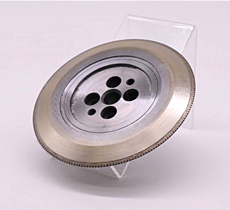
For lapping disc inquiries, additional parameters are needed beyond the standard list. Specify the disc outer diameter, inner hole diameter, total thickness, ring width, and abrasive layer thickness. Confirm whether the process is dry or wet flat grinding, the machine rotational speed and applied pressure, and the required workpiece flatness and surface roughness. Also describe any existing pain points with current discs—such as excessive wear, edge chipping, or grain shedding—as these indicate specific formulation improvements.

Cutting Wheel Selection: Critical Parameters


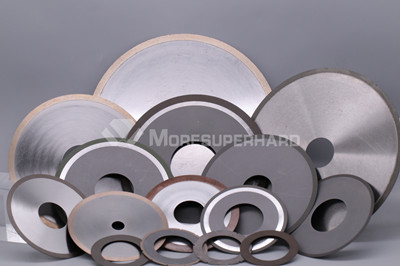
                                cutting wheels

Cutting wheels (cut-off discs) require even more rigorous parameter collection than grinding wheels, because a mismatched cutting wheel can be dangerous—vibration, chipping, and wheel breakage are real risks. When requesting a cutting wheel, provide:
  1. Workpiece material and hardness (e.g., spring steel at HRC 50+ requires a reinforced, high-performance cutting wheel).
  2. Engineering drawings with dimensional tolerances to ensure the cut meets specifications.
  3. Cutting wheel dimensions and machine mounting interface to confirm compatibility.
  4. Machine spindle speed—speed mismatch is the leading cause of cutting wheel vibration and breakage.
  5. Cutting method: dry or wet, manual or automated, and whether the cut is straight or contoured.
Always verify that the cutting wheel's maximum rated speed (RPM) exceeds the machine spindle speed. Never use a cutting wheel beyond its rated speed.

Material-to-Abrasive Quick Reference Guide:


Workpiece Material Recommended Abrasive Typical Grit Range & Notes
Titanium & Titanium Alloys Electroplated CBN 80–150 grit; gummy material, CBN resists loading
Steels (alloy, tool, stainless) CBN (cubic boron nitride) 60–220 grit; CBN is the standard for ferrous metals
Tungsten Carbide (WC) & Hard Metals Diamond 120–400 grit; diamond cuts hard, brittle carbide efficiently
Engineering Ceramics (Al₂O₃, SiC, Si₃N₄) Diamond 220–600+ grit; fine diamond for crack-free ceramic finishing


Common Mistakes to Avoid When Purchasing Abrasives

 
  • Requesting a quote with only "I need a grinding wheel"—without material, machine, or finish details. This forces the supplier to guess, and guesses are usually wrong.
  • Selecting by price alone. The cheapest wheel often costs more in the long run due to shorter life, slower cycles, and higher scrap rates.
  • Ignoring machine speed ratings, especially for cutting wheels. Speed mismatch is a safety hazard and a performance killer.
  • Using the same wheel for roughing and finishing. Coarse grits remove stock fast but leave poor finishes; fine grits finish well but remove material slowly.
  • Skipping trial runs. Always validate a new wheel with a small batch before committing to a large purchase.

Why Work With a Professional Abrasive Supplier


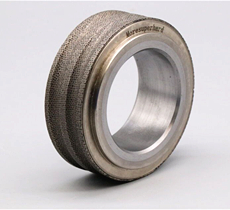
We are a professional manufacturer of CBN and diamond superabrasive tools, including grinding wheels, cutting wheels, lapping discs, and diamond dressing rollers. Our application engineers work directly with you to evaluate your workpiece, machine, and process requirements and recommend the optimal abrasive formulation, grit size, bond type, and wheel geometry. We offer full customization—from standard catalog wheels to complex formed and profiled tools—and provide technical support throughout the trial and production process. Our goal is to help you achieve the lowest cost per part, not just to sell a wheel. Contact us today for a free technical consultation and customized abrasive solution. Bring your drawings, material specs, and machine details—and we will deliver a recommendation you can take to the production floor.

Conclusion


Choosing the right grinding wheel or cutting wheel does not have to be complicated. By systematically specifying five key parameters—workpiece material, dimensions, current tool, machine conditions, and required finish—you enable your supplier to deliver an accurate, effective recommendation the first time. For cutting wheels, always verify speed ratings and provide machine parameters. For special applications like lapping discs and step grinding, provide the additional geometry and process details. Remember that material dictates abrasive type: CBN for steels and titanium, diamond for carbide and ceramics. Working with a knowledgeable supplier who asks the right questions—and validating with trial runs—ensures you achieve optimal grinding performance, consistent part quality, and the lowest total production cost.

Frequently Asked Questions


Q: How do I know which grinding wheel is right for my application?
A: Start by identifying your workpiece material and hardness, then match it to the abrasive type: CBN for steels and titanium, diamond for carbide and ceramics. Next, determine the grit size based on your required surface finish—coarser grits (60–120) for roughing, finer grits (220–600+) for finishing. Provide your machine details and target tolerances to a professional supplier for a precise recommendation.

Q: What is the difference between CBN and diamond grinding wheels?

A: CBN (cubic boron nitride) is the second-hardest abrasive after diamond and is ideal for grinding ferrous metals (steels, alloys, titanium) because it does not chemically react with iron at grinding temperatures. Diamond is the hardest abrasive and excels on non-ferrous hard materials like tungsten carbide, ceramics, and glass. Using diamond on steel causes rapid chemical wear; using CBN on carbide is inefficient.

Q: What grit size should I use for a given surface finish?

A: As a general guideline: 60–80 grit for heavy roughing (Ra 1.6–3.2 µm), 120–180 grit for general grinding (Ra 0.8–1.6 µm), 220–320 grit for finishing (Ra 0.4–0.8 µm), and 400–600+ grit for precision finishing (Ra < 0.4 µm). Actual results depend on material, machine, coolant, and dressing parameters. Always validate with trial runs.

Q: Can I use a cutting wheel on any machine?

A: No. Always verify that the cutting wheel's maximum rated RPM exceeds the machine spindle speed. Using a wheel beyond its rated speed can cause catastrophic breakage. Also confirm the wheel bore and mounting hardware match the machine, and that the wheel diameter is appropriate for the cut depth and workpiece access.

Q: How do I improve grinding wheel life without sacrificing finish?

A: Optimize dressing frequency and parameters, use adequate coolant (filtered to ≤10 µm), match wheel hardness to the operation, and ensure proper machine rigidity and fixturing. A wheel that is too hard will glaze and burn the workpiece; one that is too soft will wear rapidly. Working with your supplier to fine-tune the bond and grit often yields significant life improvements.

Q: Should I buy standard wheels or custom wheels?

A: Standard catalog wheels work well for common materials and operations. Custom wheels are justified when you have special geometries (formed profiles, non-standard dimensions), difficult-to-grind materials, high-volume production where optimization yields significant savings, or unique machine interfaces. A professional supplier can help you determine whether standard or custom is the better value for your application.
 
FOLLOW US
This Blog keeps our valued customers informed of important Radiac News and Events, and in the industries we serve.
Copyright © 2003-2023 More SuperHard Products Co., Ltd
Home
Whatsapp
E-mail
Inquiry