NEWS
03
Oct

Machining Heat-Treated Ball Screws: PCBN Hard Turning vs. Whirlwind Milling

Share:

Why Precision Ball Screw Machining Matters More Than Ever


With the rapid growth of industrial robots, automated equipment, precision machine tools, and other high-precision motion systems, precision transmission components have never been more important. As the key mechanical element that converts rotary motion into precise linear motion, a ball screw directly determines positioning accuracy, motion stability, repeatability, and service life. At the same time, manufacturing is facing tougher demands: heat-treated blanks reach HRC 60–62, while the raceway requires specific contour and dimensional accuracy. Traditional processes must balance efficiency, profile accuracy, surface quality, and tool life—which is why PCBN hard turning and whirlwind milling are now realistic alternatives to conventional grinding.


                           Machining Heat-Treated Ball Screws

Why Are Heat-Treated Ball Screws Difficult to Machine?


The core working area of a ball screw is its raceway. Unlike ordinary external cylindrical turning, the raceway has a specific cross-sectional profile, so the cutting tool must be form-designed to match the actual geometry. After heat treatment, the blank hardness can reach HRC 60–62. Under these conditions, the tool must not only offer wear resistance and chipping resistance, but also maintain a stable cutting edge to hold raceway profile and dimensional accuracy. Hard machining of ball screws is therefore not simply "cutting away hard material"—it is a complex interplay of material hardness, raceway geometry, machining accuracy, machine rigidity, tool design, and production efficiency.
The form-machining nature of the raceway deserves special attention. Because raceway dimensions, profiles, and allowances vary across ball screw specifications, there is no universal tool profile for all screw types. Tool edges must be custom-engineered to each ball screw's raceway—this is precisely what sets ball screw tools apart from standard turning inserts.


From Grinding to Hard Machining: Expanding Ball Screw Process Routes


                                  Machining Heat-Treated Ball Screws


Grinding has long been essential for high-precision ball screws, and it remains valuable wherever maximum accuracy and surface finish are required. However, manufacturers of heat-treated ball screws are now asking new questions: Can we reduce the number of operations? Can hard turning complete part of the finishing directly? Can whirlwind milling speed up raceway generation? These questions drive the growing interest in "turning instead of grinding" and "milling instead of turning."
It is important to clarify that hard turning and whirlwind milling do not simply "replace" grinding. Different workpieces, equipment, and precision requirements call for different strategies. The real value is that, under the right conditions, hard machining becomes a legitimate alternative—often faster and more economical. The goal is not to argue "turning vs. grinding," but to re-evaluate the entire process chain based on material, heat-treated hardness, raceway profile, allowance, equipment, and final precision requirements.


PCBN Hard Turning: A Proven Option for Heat-Treated Ball Screws


PCBN (polycrystalline cubic boron nitride) offers exceptional hardness and wear resistance, making it the standard choice for finishing hardened steels. In ball screw machining, PCBN tools are applied to hard turning after heat treatment: the wear-resistant PCBN cutting edge machines the HRC 60–62 material efficiently while holding the raceway profile.
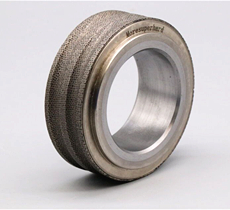
What matters most for ball screws is not the PCBN material alone, but the match between the tool edge profile and the workpiece raceway. PCBN inserts for ball screw hard turning typically combine a carbide substrate with a PCBN cutting section, are custom-designed with a non-standard profile to suit the specific raceway, and are mounted on a matching turning tool holder. In practice, simply deciding to "use CBN inserts" is never enough—tool profile, tool structure, workpiece hardness, machining allowance, and machine/tool-holder conditions must all be considered together.


Replacing Grinding with Turning: Five Factors to Evaluate


When a manufacturer evaluates hard turning as a grinding alternative, five factors demand close attention:
  1. Workpiece hardness: Heat-treatment state and actual hardness directly affect PCBN tool suitability and tool life.
  2. Raceway profile: Ball screw raceways are form-machined; the tool profile must match the workpiece design exactly.
  3. Machining allowance: Whether hard turning handles roughing, semi-finishing, or finishing determines tool geometry and cutting parameters.
  4. Equipment and fixtures: Machine rigidity, tool-holder design, clamping stability, and vibration all influence results.
  5. Final accuracy and surface quality: If the aim is to reduce downstream grinding, results after hard turning must meet the final specification.
So "Can PCBN machine ball screws?" is only the first question. For real production, the decisive question is: Can the PCBN tool reliably hold a specific raceway profile on your existing equipment? This is exactly why ball screw PCBN tools are almost always custom-designed.


PCBN Whirlwind Milling: Why "Milling Instead of Turning" Deserves Attention


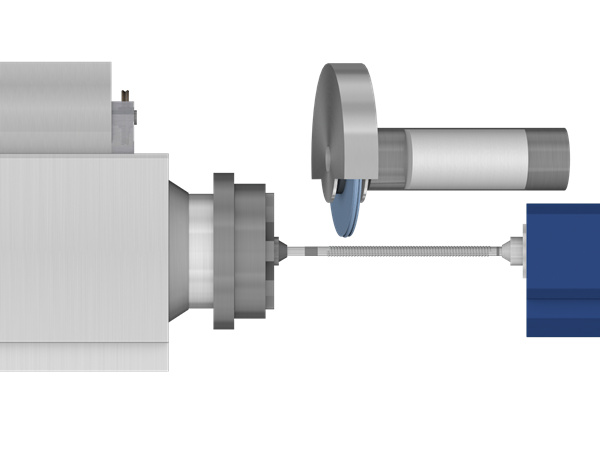
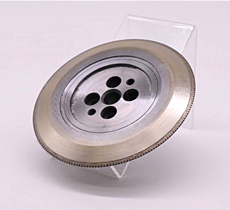
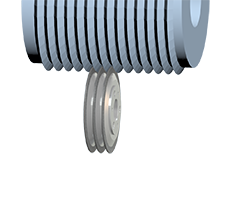
Beyond hard turning, ball screws can also be machined by whirlwind milling. Unlike conventional turning, whirlwind milling uses a rotating cutter disc carrying multiple inserts to generate raceway or thread profiles in a continuous pass. In ball screw applications, inserts usually combine a carbide body with a PCBN edge custom-designed to the raceway. For high-volume production where cycle time, efficiency, and consistency matter most, whirlwind milling deserves serious evaluation as an independent process route.
For contoured precision components like ball screws, the tool never works in isolation. The final result depends on the integration of tool profile, cutter disc structure, machine tool, workpiece material, and machining parameters. The core value of a PCBN whirlwind milling solution is therefore not the PCBN material itself, but a complete tool system engineered for the raceway profile.


Hard Turning or Whirlwind Milling? It Depends on Your Conditions


There is no one-size-fits-all answer between hard turning and whirlwind milling for ball screws. If your existing line already uses CNC turning machines and you want to optimize post-heat-treatment finishing, PCBN hard turning is the natural first candidate. If your production setup, workpiece geometry, and equipment are better suited to whirlwind milling, then PCBN whirlwind milling inserts deserve evaluation. The right question is not "which process is better," but "which process fits my material, hardness, raceway profile, machining allowance, and equipment best?" This is the key difference between a ball screw hard-machining project and standard tool procurement.


From Ball Screws to Robotics: Precision Transmission Is a Growth Trend


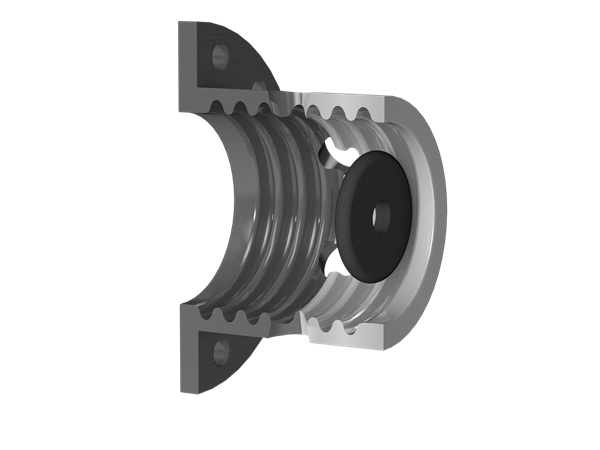
Ball screws are not isolated components. As industrial automation, robotics, precision equipment, and high-end manufacturing advance, motion systems demand ever better transmission performance. Robotic actuators need to convert motor rotation into stable, controllable linear motion; automated lines need highly repeatable linear movement; precision machine tools depend on reliable transmission mechanisms. Ball screws, nut assemblies, and other precision transmission parts are critical in all of these applications. The growth of robotics therefore ripples outward—into transmission parts, actuators, machining equipment, and the cutting-tool supply chain that supports them.


MoreSuperHard PCBN Tool Solutions for Ball Screws


To meet the machining requirements of heat-treated ball screws, MoreSuperHard provides customized PCBN tool solutions tailored to specific raceway profiles and machining methods. Current tool forms include:
  • PCBN inserts for ball screw hard turning: custom-designed to the raceway profile, mounted on dedicated turning tool holders.
  • PCBN inserts for whirlwind milling of ball screws: carbide body combined with PCBN inserts, non-standard contours based on the ball screw raceway.
Because ball screws are typical precision contour-machined parts, tool design must be integrated with the actual workpiece geometry—not selected as a standard insert by diameter alone. If you are evaluating hard turning or whirlwind milling of heat-treated ball screws, or seeking to reduce conventional grinding operations, share your ball screw drawings, material, heat-treatment hardness, current process, and equipment details. MoreSuperHard can assess the right PCBN tool solution for your specific raceway profile and machining conditions—starting with ball screws, and extending to efficient hard-machining solutions for precision transmission components.


Frequently Asked Questions


Q: What is the best way to machine heat-treated ball screws?
A: There is no single best method. PCBN hard turning suits lines that already use CNC turning and want to finish after heat treatment; PCBN whirlwind milling suits high-volume production where cycle time matters. The right choice depends on material, hardness (typically HRC 60–62), raceway profile, allowance, and equipment.

Q: Can PCBN hard turning replace grinding for ball screws?
A: In suitable cases, yes—hard turning can replace part or all of the grinding route, reducing operations and improving efficiency. But it is not a universal substitute: raceway profile accuracy, surface quality, and final tolerances must be verified against the specification before switching.

Q: Why must ball screw PCBN tools be custom-designed?
A: Ball screw raceways are form profiles that vary by screw specification—size, contour, and allowance differ. A standard insert cannot hold the raceway shape, so the PCBN cutting edge is engineered to match the specific raceway geometry, then mounted on a matched tool holder or cutter disc.

Q: What hardness range can PCBN tools machine?
A: PCBN is designed for hardened materials and excels in the HRC 55–70 range, including the HRC 60–62 typical of heat-treated ball screw blanks. Its hardness and wear resistance keep the cutting edge stable while holding profile and dimension.

Q: What is whirlwind milling for ball screws?

A: Whirlwind milling uses a rotating cutter disc with multiple inserts to generate ball screw raceways or threads in a continuous pass. In ball screws, inserts combine a carbide body with a PCBN edge custom-designed to the raceway. It is especially valuable for batch production requiring efficiency and consistency.

Q: How do I choose between hard turning and whirlwind milling?

A: Start from your existing line: CNC turning equipment → evaluate PCBN hard turning; production setup and workpiece geometry suited to rotary disc milling → evaluate PCBN whirlwind milling. Also weigh volume: whirlwind milling excels in mass production, while hard turning is flexible for varied profiles and smaller batches.
 
FOLLOW US
This Blog keeps our valued customers informed of important Radiac News and Events, and in the industries we serve.
Copyright © 2003-2023 More SuperHard Products Co., Ltd
Home
Whatsapp
E-mail
Inquiry