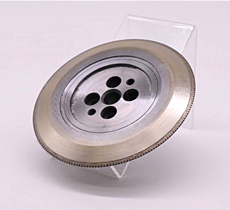
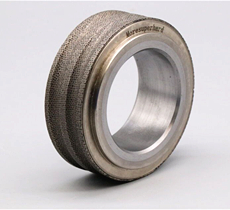
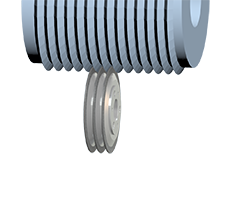
For manufacturers grinding hardened ferrous metals, resin bond CBN grinding wheels have long served as universal entry-level superabrasive tools. Featuring flexible elastic resin binders, they absorb vibration, protect fragile workpieces and deliver ultra-fine surface finishes for small-batch machining. However, resin CBN wheels suffer obvious drawbacks in continuous mass production: short service life, frequent dressing intervals, low allowable linear speed, fast binder thermal degradation and high per-piece abrasive cost.
Vitrified bond CBN grinding wheels are engineered to solve these pain points with rigid porous ceramic binders, superior heat resistance, stable self-sharpening performance and extended service cycles. Yet vitrified CBN is not a universal one-to-one replacement for resin CBN. Its brittle ceramic matrix, strict speed requirements and special dressing workflows mean factories must satisfy six complete preconditions before upgrading to avoid wheel cracking, grinding burn, workpiece scratching and production loss. This article systematically breaks down all mandatory switching criteria, machine upgrades, process adjustments, ROI evaluation and unsuitable application scenarios for global precision grinding manufacturers.
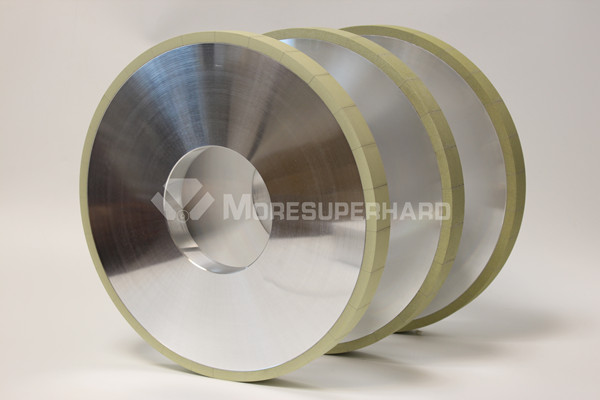
1. Workpiece Material & Grinding Process Compatibility (Fundamental Prerequisite)
1.1 Eligible Hardened Ferrous Workpieces
Vitrified CBN wheels are exclusively optimized for hard ferrous alloys with hardness HRC 50 and above, materials that match the high cutting capacity and heat resistance of vitrified bond CBN:
- Hardened mold steel, tool steel
- Bearing steel (GCr15, chrome alloy bearing stock)
- High-speed steel HSS cutting tools, gear steel
- Automotive core components: camshafts, crankshafts, transmission gears
- Heat-resistant nickel-based superalloys for aerospace power parts
Soft non-ferrous materials including mild steel, aluminum alloy, brass, copper and low-carbon steel are not compatible for direct replacement. These ductile metals easily load the open porous structure of vitrified CBN, causing wheel glazing, built-up edge and consistent surface scratches that ruin workpiece quality. Resin CBN remains the better choice for soft metal grinding.
1.2 Matching Grinding Process Characteristics
Vitrified CBN wheels fully exert their competitive advantages only under the following process types:
- High-volume continuous mass production lines (automated camshaft, bearing ring grinding)
- Long-run tasks requiring stable dimensional & profile accuracy with zero drift
- High material removal rate (MRR) heavy stock removal semi-finishing
- High-speed precision grinding (80–300 m/s linear wheel speed)
- Form grinding, thread grinding, cylindrical finishing for automotive powertrain parts
- Production lines targeting minimal dressing frequency, long wheel life and reduced machine downtime
Conversely, resin bond CBN wheels retain irreplaceable strengths for these scenarios and should not be swapped:
- Thin-walled, fragile precision parts prone to edge chipping
- Ultra-mirror ultra-fine polishing requiring elastic buffer
- Small-batch prototype machining with frequent product changeovers
1.3 No Heavy Impact or Interrupted Cutting
The rigid ceramic vitrified binder is inherently brittle with weak shock resistance. Any interrupted grinding operation such as slotted workpiece cutting, segmented gear grinding or heavy impact traverse will crack the vitrified abrasive layer and cause premature wheel failure. Resin bond’s flexible shock-absorbing matrix is mandatory for all intermittent impact grinding tasks.
2. Mandatory Grinding Machine Hardware Upgrades
2.1 Sufficient Rated Wheel Linear Speed
Resin CBN wheels have a maximum safe operating speed capped at ≤80 m/s due to low thermal resistance of polymer binders. Vitrified CBN wheels operate efficiently within 80–160 m/s, with premium industrial variants reaching 200–300 m/s for high-throughput automotive production. If your grinding machine’s maximum wheel speed is below 60 m/s, vitrified CBN cannot complete proper self-sharpening, leading to rapid glazing, workpiece thermal burn and uneven surface roughness. Factories must upgrade high-speed spindles or replace outdated grinding equipment before switching.
2.2 High Machine Rigidity & Dynamic Balancing System
Vitrified CBN wheels are far more sensitive to spindle vibration and imbalance than resin counterparts. Eligible equipment must feature:
- Ultra-rigid spindle assembly with minimal radial runout
- Stable heavy-duty slideways with low vibration during reciprocating grinding
- Integrated online dynamic wheel balancing system for continuous production
Uncontrolled vibration will trigger wheel micro-cracking, chatter marks on workpieces and drastically shorten vitrified CBN service life.
2.3 Upgraded High-Pressure High-Flow Coolant Circuit
Though vitrified bond withstands high temperatures, high-speed heavy stock removal accumulates massive localized grinding heat that risks thermal damage to both wheel and workpiece. Standard machine cooling systems must be upgraded to meet these specs:
- Minimum coolant flow rate ≥20 L/min per grinding wheel
- Targeted high-pressure multi-nozzle setup fully covering the grinding contact arc
- Correct coolant concentration ratio optimized for ferrous metal grinding
- Precision filtration system (≤5μm filter mesh) to trap hard metal chips and prevent secondary surface scratching
Dry grinding is prohibited for rough stock removal with vitrified CBN; only minor light dry finishing can be tested under strictly controlled parameters.
2.4 Precision Wheel Mounting Flanges & Clamping Hardware
Vitrified CBN’s low impact tolerance demands premium mounting accessories:
- High-precision matched wheel flanges with tight concentricity tolerance
- Reinforced clamping fixtures to eliminate loose wheel runout
- Wheel bore, outer diameter and thickness matched perfectly to spindle specs, or custom wheel redesign for existing machine flanges Poor clamping or mismatched wheel dimensions create uneven radial stress, resulting in catastrophic wheel cracking during high-speed rotation.
3. Dressing Equipment & Process Overhaul (Non-Negotiable Upgrade)
3.1 Replace Conventional Single-Point Diamond Dressers
The single-point diamond dressers widely used for resin CBN wheels cannot properly sharpen dense vitrified bond matrices. Factories must invest in dedicated vitrified CBN dressing tools:
- Diamond rotary dressing rollers (mass production standard)
- Form profiling dressing rolls for complex contour grinding
- High-grade multi-faceted cluster diamond dressers for small-batch form correction
3.2 Reset Brand-New Dressing Parameter Standards
Copying resin CBN dressing settings will glaze vitrified wheels instantly. Optimized dressing rules for vitrified CBN:
- Per-pass dressing depth limited to 0.005–0.01mm; adopt multiple shallow light passes instead of single heavy cuts
- Elevate dressing feed speed to induce controlled micro-fracturing of vitrified binder, exposing fresh sharp CBN grains
- Extend dressing intervals drastically: resin CBN requires dressing every 1–2 hours, while vitrified CBN runs tens to hundreds of production hours between maintenance cycles
3.3 Mandatory Wheel Opening & Break-In Procedure
As-sintered vitrified CBN wheels feature dense closed surface porosity. Before formal mass production, operators must perform low-speed wheel opening to fracture the top binder layer and expose cutting edges of CBN abrasives. Resin bond CBN wheels are naturally self-sharpening and skip this critical pre-production step. Skipping wheel opening leads to initial glazing, burn marks and scrapped workpieces during trial runs.
4. Full Grinding Parameter Recalibration
Direct parameter migration from resin CBN to vitrified CBN will cause severe thermal defects and dimensional instability. Global grinding engineers recommend these systematic adjustments:
- Boost wheel linear speed by 30%–80% to activate vitrified self-sharpening
- Reduce single-pass grinding depth while raising table feed rate, adopting a "light cut, fast feed" strategy to lower localized grinding heat
- Redistribute stock removal allowance: allocate more material removal during rough grinding, minimize stock left for finish grinding
- Recalibrate spark-out cycles and automatic size compensation, as vitrified CBN exhibits ultra-slow uniform wear with negligible dimensional drift over long runs
5. Cost & Mass Production ROI Evaluation
5.1 Stable High-Volume Continuous Production Requirement
Vitrified CBN wheels carry an upfront purchase cost 2–3 times higher than equivalent resin CBN abrasives. This capital investment only delivers positive economic returns under steady high-volume production schedules. The extended wheel service life, fewer machine shutdowns for wheel replacement and reduced dressing labor offset the higher initial cost. For low-volume production lines with frequent product changeovers, switching lacks financial justification and will raise total consumable expenditure.
5.2 Clear Measurable Return on Investment
Calculate three core economic indicators before upgrading:
- Total reduction in monthly grinding wheel consumption
- Cut in unplanned machine downtime for wheel change & dressing
- Lower scrap & rework rates from consistent precision grinding Most automotive bearing and camshaft manufacturers achieve a full investment payback period of 3–6 months after switching to vitrified CBN. If no clear cost-saving metrics can be projected, retain resin bond CBN wheels.
5.3 Complete Supporting Supply Chain Support
Confirm stable local supply of all matching consumables for vitrified CBN workflows:
- Custom vitrified CBN wheel tailor-made grit size, concentration, porosity and bond hardness
- Matching diamond rotary dressing rolls
- High-performance synthetic grinding coolant optimized for ferrous high-speed grinding
6. Operator Training & Strict Process Control
6.1 Specialized Operator Training Program
Workshop staff must receive targeted technical training covering:
- Safe handling rules for brittle vitrified CBN wheels to avoid impact damage during transport, mounting and shutdown
- Standardized precision wheel mounting procedures
- Distinct dressing workflows between resin and vitrified bond abrasives
- Full low-speed wheel opening break-in process before mass production
6.2 Enhanced Long-Term Quality Control Standards
Vitrified CBN operates within a much narrower stable process window compared to flexible resin CBN. Add mandatory periodic inspection items:
- Real-time contour profile accuracy monitoring
- Long-run dimensional consistency sampling over 8+ hour production shifts
- Continuous process capability Cpk tracking for automotive precision parts
6.3 Standardized Troubleshooting Protocols
Document dedicated corrective actions for common vitrified CBN grinding defects: wheel glazing, spindle vibration, grinding thermal burn, workpiece edge chipping. Operators previously trained only on resin CBN lack experience resolving these vitrified-specific issues, leading to prolonged production downtime without pre-defined troubleshooting guides.
Scenarios Where Switching to Vitrified CBN Is Not Recommended
Manufacturers should keep resin bond CBN wheels for all operations falling under these categories:
- Workpiece hardness below HRC50, or machining aluminum, copper, brass and other soft non-ferrous metals
- Grinding machines with maximum wheel linear speed under 60m/s, insufficient spindle rigidity, or inadequate coolant flow & filtration
- Interrupted slot grinding, heavy impact cutting, thin fragile components, or ultra-fine mirror polishing processes
- Low-volume discontinuous production with frequent product model changeovers
- Workshops without dedicated diamond rotary dressing rolls, relying solely on single-point diamond dressers
Conclusion
Upgrading from resin bond CBN grinding wheels to vitrified CBN is a transformative optimization for high-volume precision grinding of hardened ferrous automotive and aerospace components, delivering longer wheel life, fewer maintenance stops and stable micron-level dimensional consistency. However, the switch demands full compliance with six core preconditions: compatible hard ferrous workpieces, upgraded high-speed rigid grinding machines, dedicated dressing equipment, fully recalibrated grinding parameters, positive mass-production ROI and well-trained operating staff.
If your factory meets all switching criteria, our engineering team can provide custom vitrified CBN wheel design, process parameter optimization and on-site technical trial support. Contact us to receive free sample testing and professional grinding cost-saving analysis for your production lines.