NEWS
12
Aug

Silicon Carbide Grinding Wheels for Large Disc Substrate Machining: Selection Guide and Best Practices

Share:

Introduction


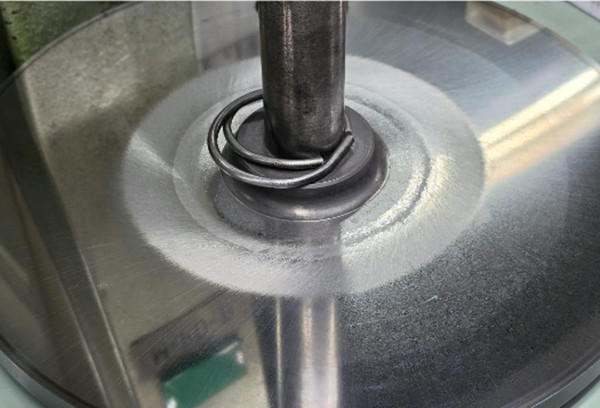
Large flat grinding disc substrates — typically ranging from 300 mm to over 500 mm in diameter — are critical components in precision machining, semiconductor equipment, and advanced manufacturing. These substrates demand exceptional flatness, parallelism, and surface finish. Silicon carbide (SiC) grinding wheels, particularly those made with green silicon carbide (GC) abrasive, are the preferred tooling solution for this demanding application.
This guide walks through the complete selection and operational framework for SiC grinding wheels used in large disc substrate machining, drawing on real production data and More Superhard's extensive experience as a Chinese manufacturer exporting advanced grinding solutions to customers worldwide.

1. Understanding the Workpiece: Large Disc Substrates


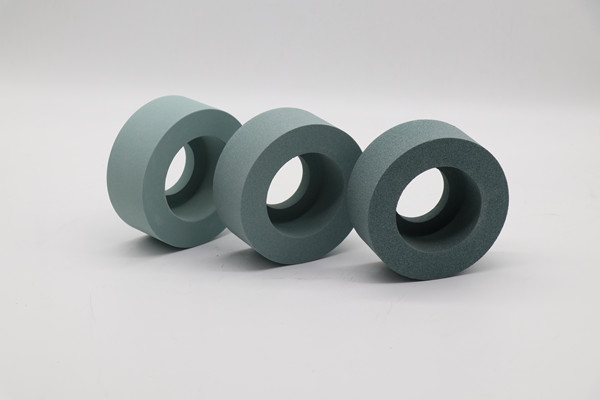
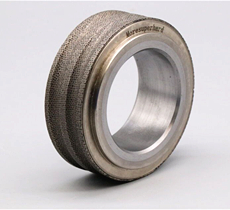
                     Silicon Carbide Grinding Wheels


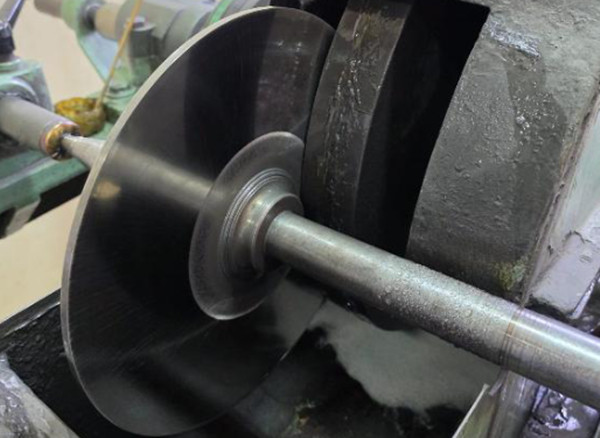
A typical disc substrate for precision grinding applications measures approximately 450 mm in outer diameter with a 300 mm inner bore and an axial thickness of 120 mm. The outer diameter tolerance is typically held to plus or minus 1 mm, while the inner bore requires a tighter tolerance of 0 to plus 0.20 mm. Achieving these specifications demands a grinding wheel that combines aggressive material removal with precise geometric control.
The substrate material is generally carbon steel or alloy steel, which presents challenges including thermal sensitivity (risk of burn marks), the need for high stock removal rates during rough grinding, and the requirement for excellent surface integrity in the final pass.

2. Abrasive Selection: Why Green Silicon Carbide (GC) Leads


                  Silicon Carbide Grinding Wheels


Among the silicon carbide family, green silicon carbide (GC) is preferred over black silicon carbide for disc substrate machining for several compelling reasons:
  • Sharper cutting action: GC crystals have a more angular, friable structure that maintains sharper cutting edges throughout the grinding operation, reducing the grinding forces and power consumption.
  • Lower burn risk: The sharper cutting action generates less heat in the grinding zone, significantly reducing the risk of thermal damage or burn marks on steel substrates — a critical concern when grinding large-diameter parts where heat dissipation is more challenging.
  • Better surface finish: GC produces a cleaner, more consistent surface finish, reducing the need for additional finishing operations.
  • Superior friability: GC grains fracture in a controlled manner during use, continuously exposing fresh sharp edges — a property known as self-sharpening that extends the wheel's effective life between dressing operations.

3. Bond Selection: Ceramic vs. Resin


The bond type determines how firmly abrasive grains are held and how the wheel responds to dressing, wear, and thermal loads. For large disc substrate grinding, the choice typically comes down to two options:

3.1 Ceramic (Vitrified) Bond — Preferred for Rough and Semi-Finish Grinding


Ceramic bonded SiC wheels offer excellent porosity, good self-sharpening behavior, and predictable wear characteristics. For rough and semi-finish grinding of disc substrates, a medium-soft to medium-hard ceramic bond is recommended. This hardness range ensures that worn grains release at the right time, exposing fresh sharp grains without excessive wheel consumption. The open structure of ceramic bonds also promotes coolant flow into the grinding zone, further reducing thermal risk.

3.2 Resin Bond — Reserved for Edge-Chipping-Sensitive Applications


Resin bonded wheels offer higher toughness and flexibility, which can be advantageous when edge chipping control is the overriding priority. However, resin bonds are more difficult to dress and tend to load more quickly when grinding steel substrates. For most disc substrate applications, ceramic bond is the better default choice, with resin bond reserved for specific finish-critical scenarios.

4. Grit Size Matching by Process Stage


Selecting the correct grit size for each grinding stage is essential for balancing material removal rate against surface finish quality. The recommended progression for large disc substrate grinding is:

4.1 Coarse Grinding (36# to 46#)


The coarse grinding stage is responsible for removing oxide scale, correcting gross geometry errors, and taking the bulk of the machining allowance. Grit sizes 36# and 46# provide aggressive material removal with high efficiency. At this stage, the priority is stock removal rate, and surface finish is a secondary concern.

4.2 Semi-Finish Grinding (60# to 80#)


Semi-finish grinding corrects flatness and parallelism deviations left by the coarse stage while leaving a controlled amount of material — typically 0.05 to 0.10 mm — for the final fine grinding pass. Grit sizes 60# and 80# strike the right balance between corrective capability and surface preparation.

4.3 Fine Grinding (150# to 220#)


The fine grinding stage produces the final surface finish and dimensional accuracy. Grit sizes 150# through 220# deliver the smooth, flat surface required for disc substrate applications. At this stage, light depths of cut and careful coolant management are essential to prevent any thermal distortion of the finished surface.

5. Grinding Wheel Safety Thickness Management


Safety thickness management is one of the most critical — and most frequently overlooked — aspects of operating large-diameter grinding wheels. A wheel that is worn beyond its safe thickness limit poses a severe burst hazard at operating speeds.

5.1 Theoretical and Practical Limits


For a 450 mm outer diameter ceramic silicon carbide grinding wheel with an original thickness of 120 mm, the theoretical minimum remaining thickness is 40 mm. Operating the wheel below this limit is strictly prohibited under any circumstances. In production practice, More Superhard recommends retiring and replacing the wheel when the remaining thickness reaches 45 to 50 mm — providing a conservative safety margin above the absolute limit.

5.2 Outer Diameter Wear Limit


In addition to thickness monitoring, the wheel's outer diameter must be tracked. When the effective grinding diameter wears to within 10 mm of the flange chuck outer diameter, the wheel must be removed from service. This rule ensures that the flange does not contact the workpiece, which would cause catastrophic damage to both the wheel and the part.

5.3 Mandatory Rejection Criteria


Regardless of remaining thickness or diameter, a grinding wheel must be immediately scrapped if any of the following conditions are observed:
  • A dull or muted sound when the wheel is tapped — indicating internal cracking or bond delamination
  • Visible dark cracks on the wheel face or periphery
  • Chipping or spalling of the wheel's end face
  • Severe uneven wear that cannot be corrected by dressing
  • Inability to achieve acceptable dynamic balance after correction
These conditions indicate structural compromise that cannot be remedied by continued use and pose an immediate safety hazard to operators and equipment.

6. Coolant Strategy and Thermal Management


Effective coolant delivery is just as important as wheel selection when grinding large disc substrates. The large contact area between a 450 mm wheel and a flat substrate generates significant heat, and inadequate cooling is the primary cause of thermal burn marks — the most common quality defect in disc substrate grinding.
More Superhard recommends high-pressure flood cooling with a minimum nozzle pressure of 3 bar, directed at the wheel-workpiece interface from multiple angles. Water-soluble synthetic coolants with good lubricity are preferred over straight oils for SiC grinding, as they reduce the friction coefficient while providing adequate corrosion protection for the steel substrate. Coolant concentration should be monitored daily and maintained within the manufacturer's recommended range to prevent bacterial growth, loss of lubricity, and corrosion.
Additionally, the coolant filtration system should be capable of removing particles down to 20 micrometers or finer. Recirculated swarf that is not adequately filtered will embed in the grinding wheel's surface, accelerating loading and degrading surface finish on subsequent parts.

7. Process Optimization Tips from More Superhard


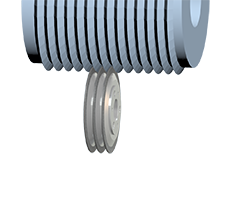
                           Grinding wheels


Based on years of field experience supporting disc substrate grinding operations around the world, More Superhard recommends the following best practices:
  • Always match the grinding wheel specification to the specific workpiece material, machine rigidity, and production volume — a generic 'one-size-fits-all' wheel will compromise either productivity or quality.
  • Implement a wheel wear tracking system that logs thickness measurements after each dressing cycle, enabling predictive replacement rather than reactive scrapping.
  • Use high-pressure coolant delivery systems (minimum 3 bar at the nozzle) to ensure effective chip evacuation and thermal management in the grinding zone.
  • Perform dynamic balancing of every new wheel before installation, and re-balance after each major dressing operation.
  • Train operators to recognize the early auditory and visual signs of wheel loading, dulling, and imbalance — early intervention prevents both quality defects and safety incidents.

Conclusion


Selecting and managing silicon carbide grinding wheels for large disc substrate machining requires careful attention to abrasive type, bond formulation, grit progression, and — above all — safety thickness protocols. Green silicon carbide with a ceramic bond offers the best combination of cutting performance, thermal management, and operational safety for the majority of disc substrate applications.
More Superhard manufactures a full range of SiC and CBN grinding wheels for precision machining applications. Our engineering team provides custom wheel design, process optimization support, and ongoing technical service to customers across the globe. Visit www.moresuperhard.com to learn more or request a consultation for your specific grinding application.
 
FOLLOW US
This Blog keeps our valued customers informed of important Radiac News and Events, and in the industries we serve.
Copyright © 2003-2023 More SuperHard Products Co., Ltd
Home
Whatsapp
E-mail
Inquiry